Important
Dates in the History of Religion Important Dates in the History of Religion
| A.D. | |
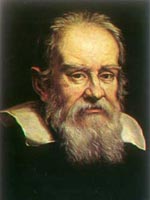
| 1983 | Galileo rehabilitated |
| 1962 - 65 | Second Roman Catholic Vatican Council - changes in liturgy and greater participation in services |
| 1933 - 45 | The Nazi Third Reich, attacked Jews, although this was more a racial onslaught than one about faith |
| 1869 - 1948 | Lifetime of Mahatma Gandhi, dedicated to Indian independence and Hindu - Muslim accord |
| 1869 - 70 | First Roman Catholic Vatican Council. Dogma of papal infallibility promulgated |
| 1859 | Charles Darwin published Origin of Species , which elucidated a theory of organic evolution |
| 1483 - 1546 | Lifetime Martin Luther, leader of the Protestant Reformation in Germany and author of "95 Theses" |
| 1224 - 74 | Lifetime of Saint Thomas Aquinas, Italian philosopher and Roman Catholic theologian |
| 1054 | Catholic Pope Leo IX condemned the patriarch of Constantinople, finalizing the split between the Eastern Orthodox Church and the Roman Catholic Church |
| circa 936 | Traditional date of the arrival from Iran of the first Parsis (followers of Zoroastrianism) in India |
| circa 570 - 632 | Lifetime of -Muhammad the Prophet - whose teachings, recorded in the Koran, form the basis of Islam |
| 622 | Muhammad fled persecution in Mecca and settled in Yathrib (later Medina) |
| 5th century | Two Buddhist sects - Zen and Pure Land (or Amidism) -established |
| 4 - circa A.D. 30 | Lifetime of Jesus of Nazareth, founder of Christianity |
| B.C.E. | |
| circa 200 | The Bhagavad Gita, important Hindu text, was written |
| circa 540 - circa 468 | Lifetime of Mahavira, founder of the Jains |
| 551 - 479 | Lifetime of Confucius, founder of Confucianism |
| circa 563 - circa 483 | Lifetime of Buddha, founder of Buddhism |
| 588 | Traditional date of Zoroaster's revelation |
| 604 | Traditional birth date of Lao-tzu, founder of Taoism |
| circa 1100 - circa 500 | The Veda , sacred texts of the Hindus, are compiled |
| circa 13th century | Moses, Hebrew lawgiver, lived |
| circa 2000 | i.e some time between the 19th and 20th century - Abraham lived. Abraham is accepted as a patriarch in both the Jewish and Islamic traditions |
Ontological
Arguments Important Dates
| 1078 | St. Anselm Proslogion. Followed soon after by Gaunilo's critique In Behalf of the Fool |
| 1264 | Aquinas Summa. Criticises an argument which somehow descends from St. Anselm |
| 1637 | Descartes Meditations. The Objections -- particularly those of Caterus and Gassendi -- and the Replies contain much valuable discussion of the Cartesian arguments |
| c1680 | Spinoza Ethics. Intimations of a defensible mereological ontological argument, albeit one whose conclusion is not (obviously) endowed with religious significance |
| 1709 | Leibniz New Essays Concerning Human Understanding. Contains Leibniz's attempt to complete the Cartesian argument by showing that the Cartesian conception of God is not inconsistent |
| 1776 | Hume Dialogues Concerning Natural Religion. Part IX is a general attack on a priori arguments (both analytic and synthetic). Includes a purported demonstration that no such arguments can be any good |
| 1787 | Kant Critique of Pure Reason. Contains famous attack on traditional theistic arguments. Three objections to "the ontological argument", including the famous objection based on the dictum that existence is not a predicate |
| 1831 | Hegel Lectures of 1831. Famous assertion -- uncontaminated by argument -- of the correctness of ontological arguments |
| 1884 | Frege Foundations of Arithmetic. Existence is a second-order predicate. First-order existence claims are meaningless. So ontological arguments -- whose conclusions are first-order existence claims -- are doomed |
| 1941 | Hartshorne Man's Vision of God. Defence of modal ontological arguments, allegedly derived from Proslogion 3 |
| 1960 | Malcolm "Anselm's Ontological Argument". Defence of modal ontological arguments by a famous ordinary philosopher |
| 1970 | Lewis "Anselm and Actuality". The key critique of ontological arguments. All ontological arguments are either invalid or question-begging; moreover, in many cases, they have two closely related readings, one of which falls into each of the above categories |
| 1974 | Plantinga The Nature of Necessity. Plantinga's "victorious" modal ontological argument |
| 1995 | Gödel Collected Works Volume III. Gödel's ontological argument. Taxonomy of Ontological Arguments |
 |